What Services Does Hospice Provide?
Some people look into hospice after a hospital discharge, while others have cared for a parent at home for months and want to know what help is available. What services does hospice provide once your loved one enrolls?
Hospice provides medical, personal, emotional, and spiritual care for a person with a terminal illness, along with support for the people caring for them. Depending on the care plan, hospice services may include:
- Nursing visits and physician oversight
- Pain and symptom management
- Medications, equipment, and supplies related to the illness
- Hospice aide help with bathing and personal care
- Social work, spiritual care, and counseling
- Respite care and grief support for the family
In this article, the Valley Oaks Hospice team walks through each type of hospice service and where its coverage ends.
What Medical Services Does Hospice Provide?
Hospice provides nursing care, physician oversight, symptom management, and therapy aimed at keeping your loved one comfortable. Medical care under hospice usually falls into four areas:
Pain and Symptom Management
Easing discomfort sits at the center of every care plan, and the team watches for symptoms such as:
- Pain
- Shortness of breath
- Nausea and vomiting
- Anxiety or agitation
- Constipation and fatigue
- Excess secretions in the throat or mouth
Pain control often involves adjusting medications as needs change, which we cover in more detail in our guide to pain management for terminal illness.
Skilled Nursing Care
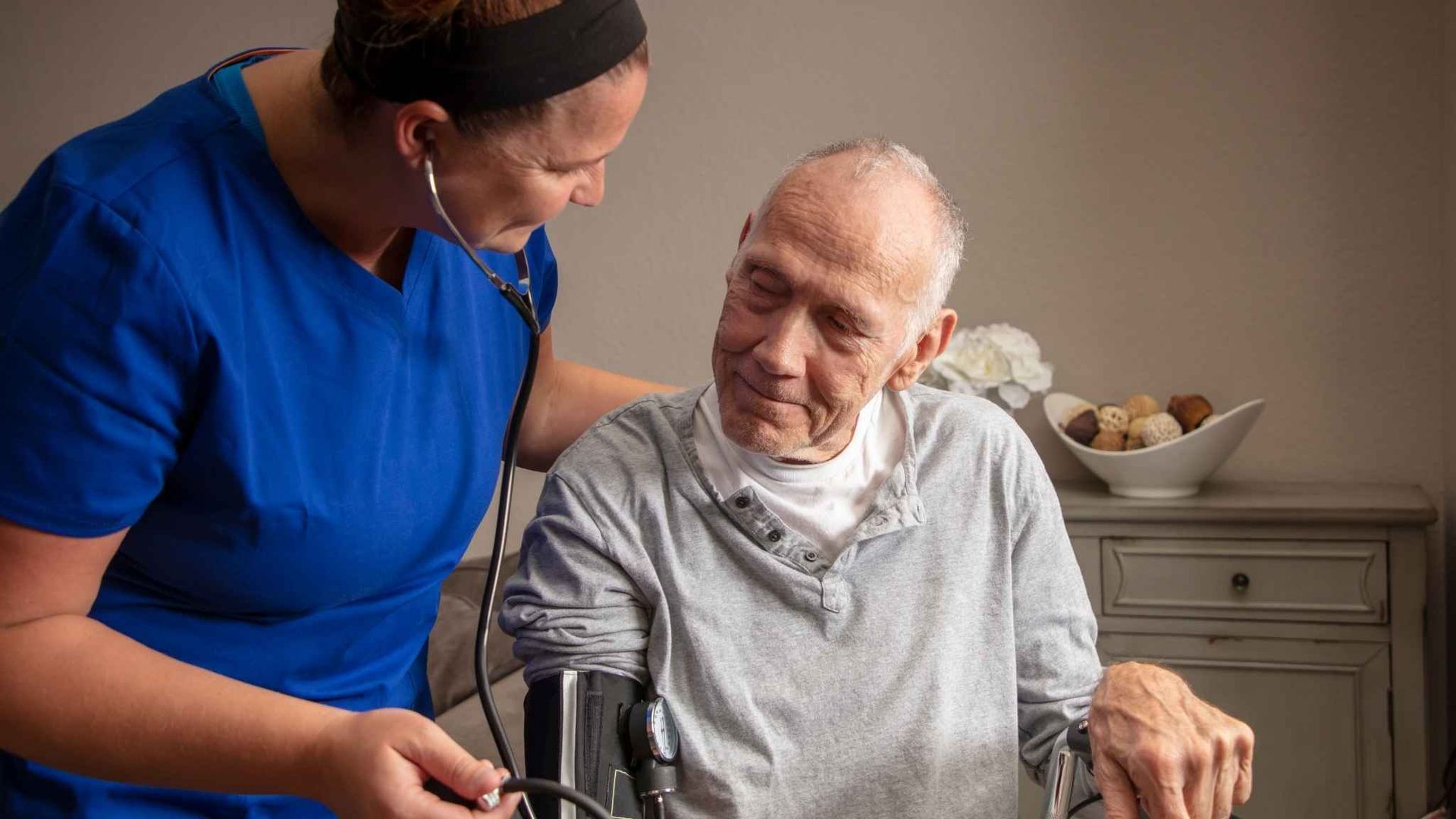
A nurse is usually the team member you see most often, and hospice nursing services during a visit may include:
- Assessing symptoms and checking vital signs
- Giving or coordinating medications
- Updating the care plan with physicians
- Pointing out changes that need attention
Our nurses can also bring X-rays, ultrasounds, blood work, and urine testing into the home when a patient's plan calls for them, though these tests are not part of every visit.
Physician and Medical Oversight
A hospice medical director and physicians oversee medical care. Your loved one's own doctor can stay involved as the attending physician.
Therapy for Comfort and Function
Hospice can include therapy when it helps your loved one stay safe and comfortable. Depending on the care plan, that may involve:
- Physical therapy to help with moving safely in bed or getting to a chair
- Occupational therapy to make daily tasks like dressing less tiring
- Speech-language therapy to help with swallowing or communication
We tailor physical therapy so patients can move with more independence when their condition allows, while medications and equipment keep them comfortable between visits.
What Medications, Equipment, and Supplies Can Hospice Provide?
Hospice covers the medications and medical equipment needed to manage the terminal illness and related conditions, along with the supplies used in daily care. Here's how each category breaks down:
Comfort Medications
Under the Medicare hospice benefit, drugs for pain relief and symptom control related to the terminal illness may be covered, with a copayment of up to $5 per prescription. These typically include medications for:
- Pain
- Nausea
- Breathing discomfort
- Anxiety or agitation
- Constipation
Medications meant to cure the terminal illness generally fall outside the hospice benefit.
Durable Medical Equipment
Equipment that makes care at home safer can include:
- Hospital beds
- Wheelchairs and walkers
- Oxygen equipment
- Bedside commodes
The care plan decides which items your loved one receives.
Medical Supplies
When the care plan calls for them, hospice can also supply wound dressings, catheters, gloves, and other items used in daily comfort care. Beyond these medical needs, much of the help you may lean on comes with personal care.
How Do Hospice Aides Help With Daily Care?
Hospice aides help with personal care, such as bathing and grooming, so your loved one stays clean and comfortable. They work under the care plan alongside the nurse, who handles the clinical side.
Personal Hygiene and Grooming
During a visit, an aide may help with:
- Bathing
- Grooming and oral care
- Dressing and toileting
- Changing bed linens
- Repositioning your loved one to prevent soreness
Our home health aides also check vital signs and can help around the house with tasks like laundry and cooking.
Supporting Comfort and Dignity
Regular personal care protects your loved one's dignity and takes physical strain off you, especially with lifting. Aides come for scheduled visits, so much of hospice is built around preparing you for the time in between.
What Support Does Hospice Provide for Family Caregivers?
Hospice supports family caregivers with hands-on teaching and round-the-clock access to a nurse, plus short breaks through respite care. That support usually takes three forms:
Caregiver Education
Your hospice nurse can teach you how to:
- Give medications safely
- Position your loved one comfortably
- Provide mouth care
- Recognize new or worsening symptoms
- Know when to call the hospice team
24/7 Clinical Support
We keep a nurse available 24/7, including holidays, so a question at 2 a.m. can reach someone who can talk you through what is happening and arrange an after-hours visit when needed.
Respite Care
Respite care gives the primary caregiver a short break while your loved one stays in an approved inpatient facility. Under Medicare, each stay can last up to five days, and you can use it more than once on an occasional basis, with a coinsurance of 5% of the Medicare-approved amount.
Our guides on how to qualify for respite care and who pays for respite care cover eligibility and costs, and hospice also supports the emotional side of caregiving.
What Emotional and Spiritual Services Does Hospice Provide?
Hospice provides social work and spiritual care, plus counseling for patients and families coping with a terminal illness. These hospice support services are part of the Medicare hospice benefit, and each one meets a different need:
Medical Social Work
A hospice social worker may help you:
- Adjust emotionally to the diagnosis
- Communicate openly as a family
- Complete advance care planning
- Connect with community resources
- Sort through insurance questions within their role
Chaplain and Spiritual Care
Spiritual care is optional and follows your loved one's wishes. We arrange visits from chaplains and rabbis for patients who want religious guidance, and patients without a religious affiliation can talk through life's bigger questions with our staff.
Emotional Support and Counseling
Counseling helps you and your loved one work through feelings such as:
- Fear and uncertainty
- Sadness
- Anticipatory grief, the sorrow that can begin before a death occurs
- Difficult conversations between family members
Complementary Comfort Services
We also offer music therapy, which may help ease stress and lift mood, along with pet therapy, where visits with dogs and cats provide companionship and may lower anxiety. These services vary by provider, and each one comes from a different member of the hospice team.
Who Provides Hospice Services?
Hospice services come from an interdisciplinary team, a group of professionals with different specialties who plan and deliver care together. A typical hospice team includes:
- A medical director and hospice physicians
- Registered nurses
- Hospice aides
- Social workers
- Chaplains or spiritual counselors
- Therapists when needed
- Trained volunteers
Team members share what they see, so a nurse who notices new anxiety can bring in the social worker without you arranging it, and the same team travels to wherever your loved one lives.
Where Can Hospice Services Be Provided?
Hospice care comes to your loved one, and most routine hospice care does not require a move. Hospice may take place in settings such as:
- A private residence
- An assisted living community
- A nursing home or other long-term care facility
- A hospital or inpatient setting when symptoms need closer management
When your loved one lives in a facility, we coordinate with the facility staff so care stays consistent. Our guide to hospice care at home covers what hospice services at home look like, and our step-by-step guide to getting hospice care explains how to start.
What Is Usually Not Included in Hospice Care?
Hospice usually does not include curative treatment for the terminal illness or routine round-the-clock caregiving, and long-term room and board is generally excluded. Care unrelated to the terminal illness also falls outside hospice, though Medicare or other insurance may still cover it. Here is what the main limits involve:
Curative Treatment for the Terminal Illness
When your loved one elects the Medicare hospice benefit, comfort care replaces treatment meant to cure the terminal illness. Hospice still treats symptoms actively, so choosing hospice does not mean giving up care.
Round-the-Clock Routine Caregiving
Routine hospice runs on scheduled visits plus phone access, so you will need a plan for who stays with your loved one in between. At home, that usually means family members or privately hired caregivers, while facility staff fill that role in a nursing home or assisted living community.
Long-Term Room and Board
Medicare generally does not pay room and board for someone receiving hospice in a nursing home or assisted living community. Short-term inpatient and respite stays may be covered when criteria are met.
Hospital or Emergency Care Arranged Outside Hospice
Call your hospice team before going to the hospital or calling an ambulance for problems related to the terminal illness, since hospice generally has to arrange that care for it to fall under the benefit. Our guide to what is usually not included in hospice care covers each exclusion.
Does Every Hospice Patient Receive the Same Services?
No. Every hospice patient receives services based on an individualized plan of care, so the type and frequency of help varies with each person. The care plan shapes:
- How often nurses and aides visit
- Which team members play the biggest role, since some patients lean on nursing while others need more social work or spiritual care
- Which medications and equipment are provided
- How care changes as symptoms progress
We build each plan around the whole person and update it as needs shift, with support that extends to your family after a loss.
Does Hospice Provide Support After a Patient Dies?
Yes. Hospice provides bereavement support to the family after a patient dies, and Medicare hospice standards require this support to be available for up to 12 months after the death. Bereavement support may include:
- Grief counseling
- Follow-up calls or visits
- Information about grief and coping
- Support groups or referrals to community resources
Our grief support groups connect family members with others facing a similar loss.
Frequently Asked Questions
Does hospice provide 24-hour care?
Routine hospice does not include continuous bedside staffing. During a medical crisis, such as uncontrolled pain or trouble breathing, hospice can provide continuous home care, where nurses and aides stay for extended hours until symptoms are under control. Under Medicare rules, this level of care involves at least eight hours of care within a 24-hour day and is meant to be temporary. Our article Does Hospice Cover 24-Hour Care at Home? walks through each level of care.
Can someone receive hospice for longer than six months?
Yes. Medicare uses a prognosis of six months or less if the illness follows its usual course, but your loved one can stay on hospice longer if they still meet eligibility rules and a physician recertifies them. The Medicare hospice benefit includes two 90-day benefit periods followed by an unlimited number of 60-day periods.
Hospice Care Services Center on Comfort and Quality of Life
So, what services does hospice provide at its core? Every service points toward keeping your loved one comfortable while supporting the people around them, and because the plan adjusts as needs change, the help you receive in the first week may look different from the help you need later on.
How Can Valley Oaks Hospice Help Your Family?
Valley Oaks Hospice provides comfort-focused hospice care for families in Orange County, with a plan built around your loved one's needs and your family's. Along with nurse and home health aide visits, our team offers:
- A nurse available 24/7, including holidays
- Mobile X-ray and ultrasound when appropriate
- In-home blood work and urinalysis
- Music therapy and pet therapy
If you are unsure what your loved one would qualify for,
contact us or call
626-593-5166 to talk through your situation. We will listen first and help you decide on next steps at a pace that feels right for your family.